If you live in Oakland Park or anywhere in Broward County, your roof takes a beating year-round intense UV exposure, heavy summer rain, tropical storms, and hurricane season. Most homeowners don’t think about their roof until water is dripping through the ceiling. By then, what could have been a $400 repair has turned into a $4,000 problem.
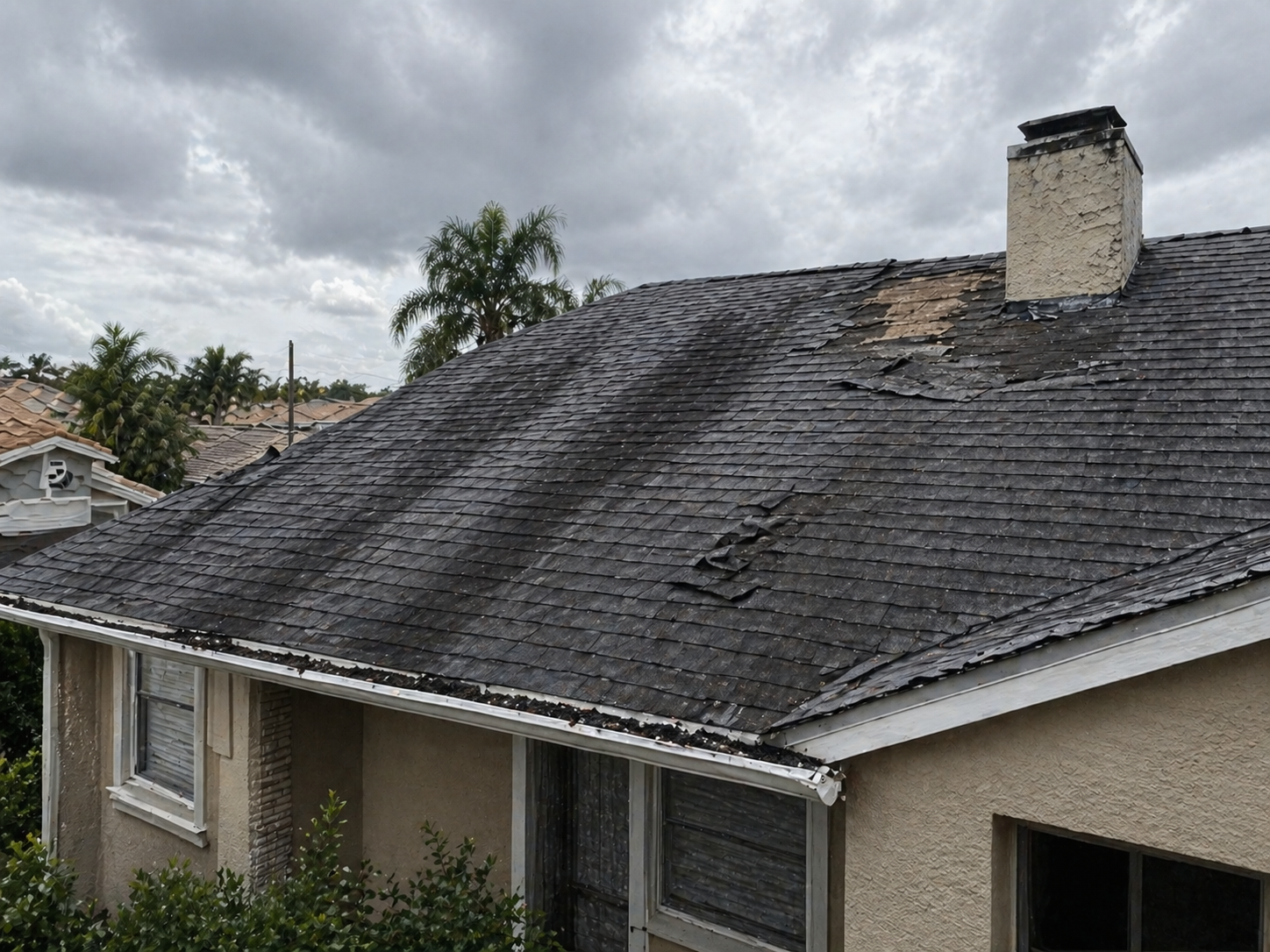
Here are the 7 warning signs every Oakland Park homeowner should know and what to do when you spot them.
Sign 1: Water Stains on Your Ceiling or Walls
Water stains are the most obvious sign and the one most homeowners ignore too long. If you see brown or yellowish rings spreading across your ceiling or damp patches forming on interior walls, your roof has an active or recent leak.
The tricky part is that the stain almost never appears directly below the entry point. Water travels along rafters and sheathing before dripping down, which means the actual damage could be several feet away from what you see inside. A professional inspection traces the leak path from both the interior and exterior something a DIY check cannot reliably do.
What to do: Call a licensed roofing contractor in Oakland Park for a full inspection. Don’t wait for the next rain the damage is already happening inside your walls.
Sign 2: Missing, Curling, or Cracked Shingles
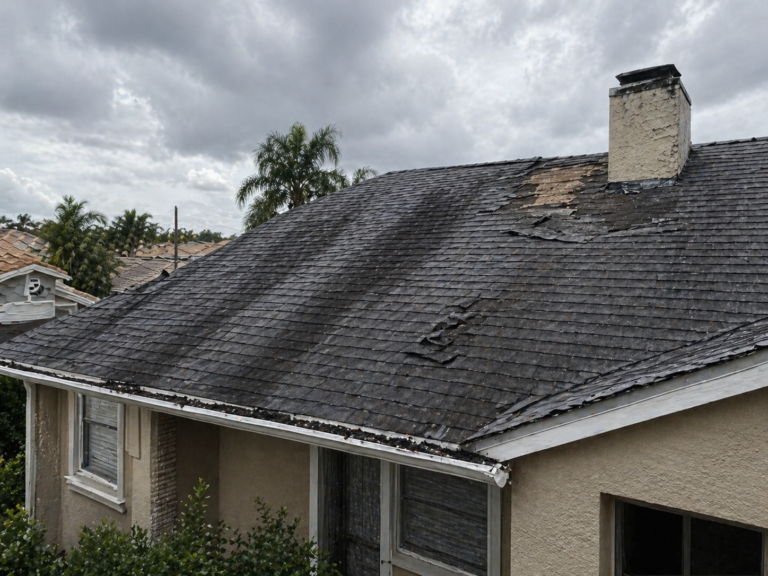
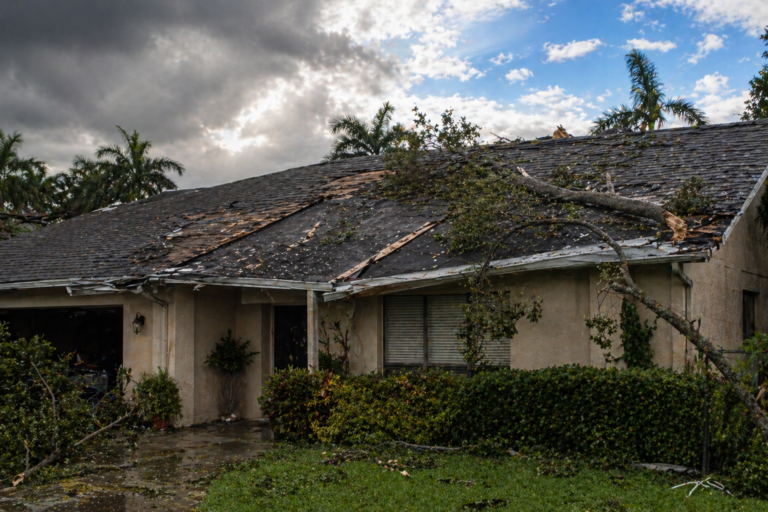
Walk around your property and look up. Missing shingles leave bare underlayment exposed to Florida’s UV and rain they will leak. Curling shingles (the edges lifting or the center buckling) indicate age, heat damage, or improper ventilation. Cracked shingles are almost always wind damage from a recent storm.
Any of these conditions allows water to penetrate. In Florida’s wet season, even one missing shingle can cause significant interior water damage within a single heavy rain event.
What to do: If you spot 5 or fewer damaged shingles in an isolated area, a targeted repair is typically sufficient. If you’re seeing widespread curling across multiple sections, that signals the roof is nearing end of life.
Sign 3: Granules in Your Gutters
Asphalt shingles are coated with granules that protect against UV rays and add fire resistance. As shingles age, these granules shed and collect in your gutters. A small amount is normal a large buildup after every rain is not.
Excessive granule loss means your shingles are losing their protective coating. Once the base asphalt is exposed to Florida’s sun, deterioration accelerates rapidly. This is one of the most common signs we find during roof inspections in Oakland Park and one of the most overlooked by homeowners.
What to do: Clean your gutters and look inside for dark, sand-like granule buildup. If you’re filling a bucket every season, schedule a roof inspection.
Sign 4: Sagging Roof Sections
A sagging or dipping roofline is never a cosmetic issue it is a structural warning. It indicates that water has compromised the roof decking (the wood sheathing beneath the shingles), the rafters, or both. Left unaddressed, sagging roofs can collapse under the weight of heavy rain or wind pressure.
Sagging is especially dangerous in Florida because it typically develops gradually homeowners mistake it for a slight design curve until the problem becomes severe.
What to do: This requires immediate inspection. Do not delay sagging decking deteriorates fast in South Florida’s humidity and will not improve on its own.
Sign 5: Daylight Visible in Your Attic
Go into your attic during daylight and look up. If you can see beams of light coming through the roof boards, water can get in through those same gaps. Also check for dark staining on the wood, damp insulation, or a musty smell all signs of moisture penetration.
Florida’s heat and humidity create ideal mold-growing conditions in a damp attic. What starts as a minor leak can produce significant mold within weeks, creating health hazards and dramatically increasing your repair costs.
What to do: Any daylight in the attic means you have gaps in your roofing system. Call for an inspection this one needs professional attention regardless of how small the gap appears.
Sign 6: Damaged or Missing Flashing
Flashing is the metal sealing system around chimneys, vents, skylights, and any roof penetrations. It is the number one cause of leaks on roofs under 20 years old in South Florida. When flashing cracks, lifts, or pulls away from the wall, water enters directly through the gap.
Because flashing failures are rarely visible from the ground, most homeowners don’t discover them until the leak shows up inside. A roofing contractor will check every flashing point during a proper inspection.
What to do: If your roof is 8–15 years old and you have an active leak, failed flashing is the most likely culprit. A flashing repair typically costs $200–$600 far less than the interior damage it prevents.
Sign 7: Your Roof Is 20+ Years Old
Asphalt shingles in Florida have an effective lifespan of 15–20 years due to the intense UV exposure, heat, and storm activity. If your roof is approaching or past that age, you may not see obvious damage yet but the underlying system is likely degrading.
Proactive replacement before failure is significantly cheaper than emergency replacement after a collapse or severe storm damage. It also allows you to choose your timing, material, and contractor rather than making rushed decisions after a disaster.
What to do: If your roof is 18+ years old, schedule an annual inspection and get an honest assessment of remaining life expectancy. We’ll tell you if you have 2 years or 10 no pressure either way.
What to Do If You Spot Any of These Signs
Don’t wait for the problem to get worse. In Oakland Park’s climate, roof damage escalates faster than almost anywhere else in the country heat, humidity, and storm season create a perfect storm of deterioration.
Call Oakland Park Roofers at (754) 256-5424 for a free roof inspection. We’ll check every section of your roof, document all findings with photos, and give you a written report at no charge, no obligation. Whether you need a $350 repair or a full replacement, you’ll know exactly what you’re dealing with before spending a dollar.