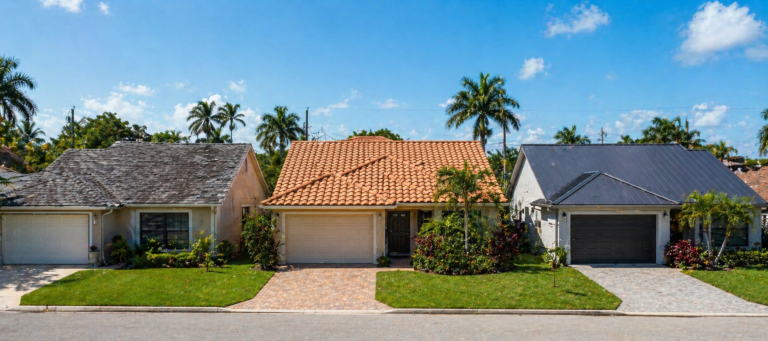
If you’ve moved to South Florida from another state, you’ve probably been told your new home’s roof won’t last as long as what you were used to. That’s true and understanding exactly why helps you plan, budget, and avoid being caught off guard by a failing roof.
Florida’s roofing environment is uniquely demanding: intense UV radiation year-round, extreme heat cycling, high humidity, salt air in coastal areas, and annual hurricane threats. These factors accelerate aging for every roofing material but some handle it significantly better than others.
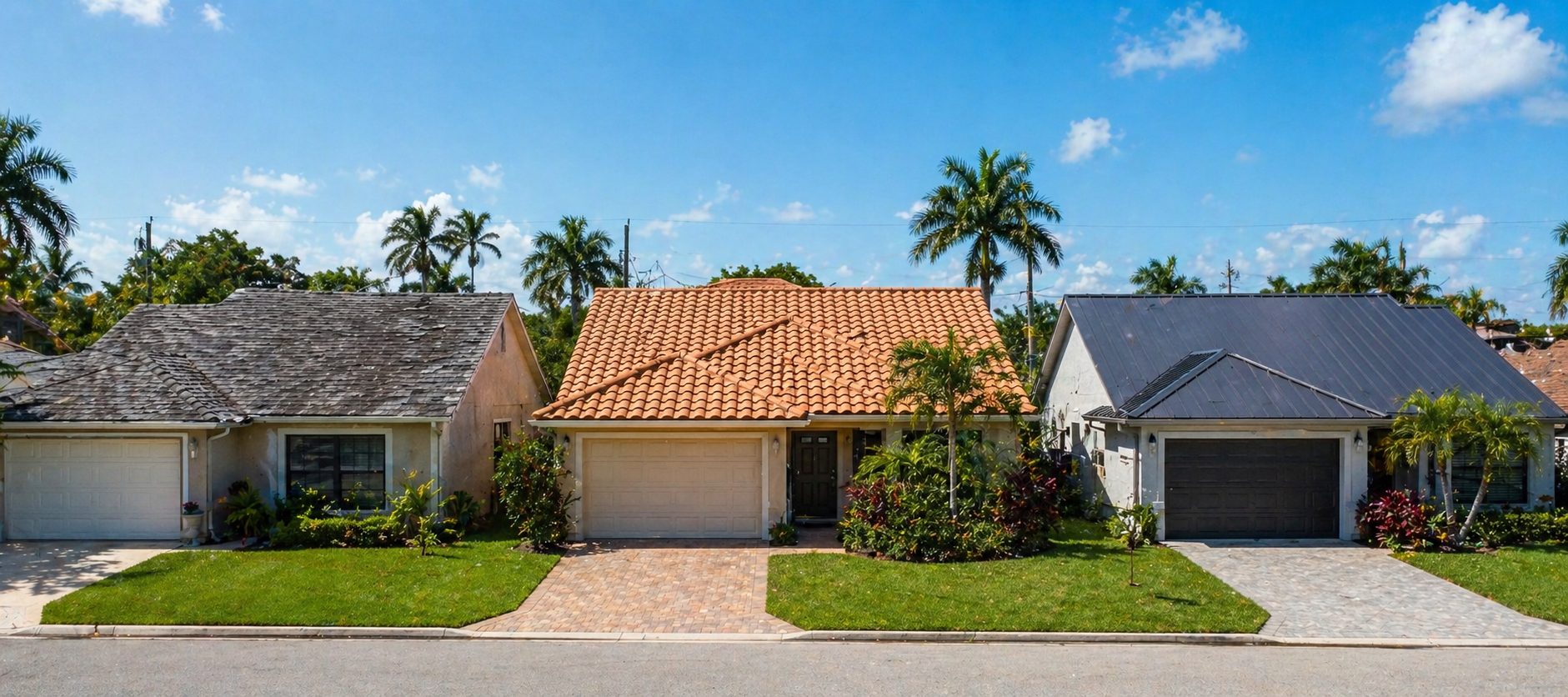
Roof Lifespan by Material in Florida
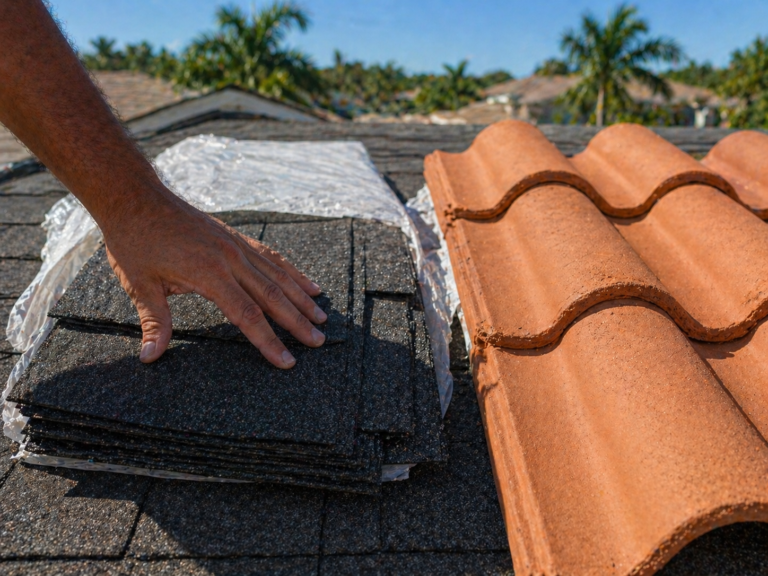
Asphalt Shingles 15 to 20 Years
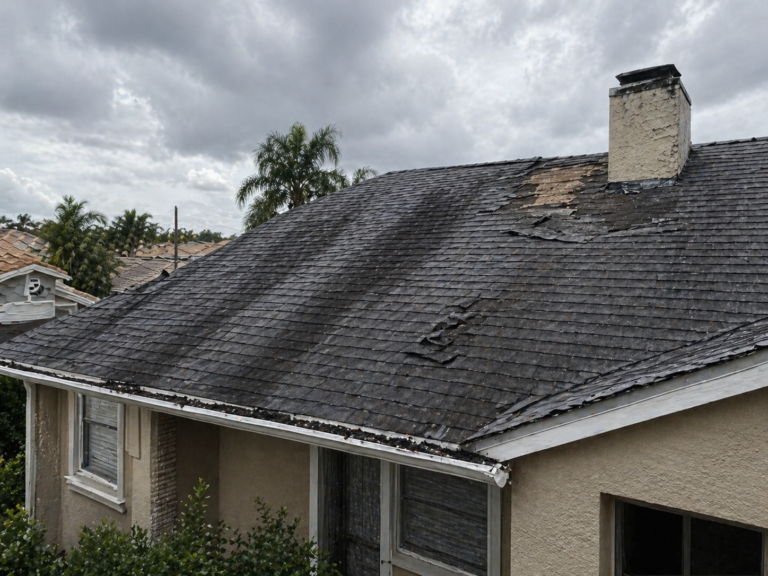
The most common roofing material in Oakland Park and Broward County, asphalt shingles have a significantly shorter lifespan in Florida than the 25–30 years advertised by manufacturers. Those ratings are based on temperate climate testing, not South Florida conditions.
In practice, 3-tab shingles last 12–17 years in Florida. Architectural (dimensional) shingles perform better typically 17–22 years due to their thicker construction and better wind resistance. After 15 years, annual inspections become critical to catch deterioration before leaks develop.
Signs it’s time to replace: Widespread granule loss, curling across multiple roof sections, shingles that crack or break when touched.
Concrete Tile 30 to 50 Years
Concrete tile is one of the best performing roofing materials for South Florida’s climate. It handles UV, heat, and humidity extremely well, and properly installed concrete tile can exceed 40 years of service life in Broward County. It also qualifies for significant wind mitigation insurance discounts.
The weak point for tile roofs in Florida is not the tiles themselves it’s the underlayment beneath them. The felt or synthetic underlayment on a tile roof typically lasts 20–25 years, meaning a tile roof may need underlayment replacement before the tiles need replacing.
Signs it’s time to repair or replace underlayment: Leaks appearing despite intact tiles, bubbling or cracking visible at the tile edges, age exceeding 20 years.
Clay Tile 40 to 60 Years
Clay tile outperforms concrete in longevity and UV resistance, and is common in higher-end Broward County communities. It’s heavier than concrete tile, which means the underlying roof structure must be engineered to support it. If your home was built with clay tile, it’s already structurally rated for it.
Like concrete tile, the limiting factor is typically the underlayment rather than the clay tiles themselves. With proper underlayment replacement at the 20–25 year mark, a clay tile roof can genuinely last 50+ years in Florida.
Signs it’s time to act: Cracked or broken tiles (individual tiles can be replaced), lifting at ridge and hip caps, visible deterioration of mortar.
Metal Roofing 40 to 70 Years
Metal roofing particularly standing seam metal is the longest-lasting roofing option available for Florida homes. It handles UV, wind, and rain better than any other material, qualifies for the highest wind mitigation discounts, and requires minimal maintenance over its service life.
The higher upfront cost ($20,000–$35,000 for an average Oakland Park home) is offset by the dramatically reduced lifetime cost a properly installed metal roof may outlast the homeowner. It’s also extremely energy efficient, reflecting heat rather than absorbing it, which can reduce cooling costs by 10–25% in South Florida’s climate.
Signs of a problem: Metal roofing issues are usually localized loose fasteners, damaged panels at penetrations, or rust at cut edges. Whole-roof replacement is rarely needed before 40 years.
Flat / TPO Roofing (Commercial) 15 to 25 Years
Flat roofing systems are common on commercial properties and some residential additions in Oakland Park. TPO (thermoplastic polyolefin) is the current standard it’s white, heat-reflective, and handles Florida’s UV well. The main vulnerabilities are seam integrity and ponding water from inadequate drainage.
TPO membrane systems typically last 15–20 years in South Florida. Modified bitumen systems last 10–15 years. Regular inspection of seams and drainage is critical for flat roofs.
Why Florida Roofs Age Faster Than Manufacturer Ratings
UV radiation South Florida receives some of the highest UV index levels in North America. UV degrades asphalt shingles and EPDM rubber at a rate roughly 30–40% faster than northern states.
Thermal cycling Roofs in Oakland Park can reach surface temperatures of 150–170°F on summer afternoons and cool significantly overnight. This daily expansion and contraction fatigues roofing materials, fasteners, and sealants over time.
Humidity and moisture Year-round high humidity keeps roofing materials perpetually exposed to moisture, accelerating wood rot in decking and degradation of adhesives and sealants.
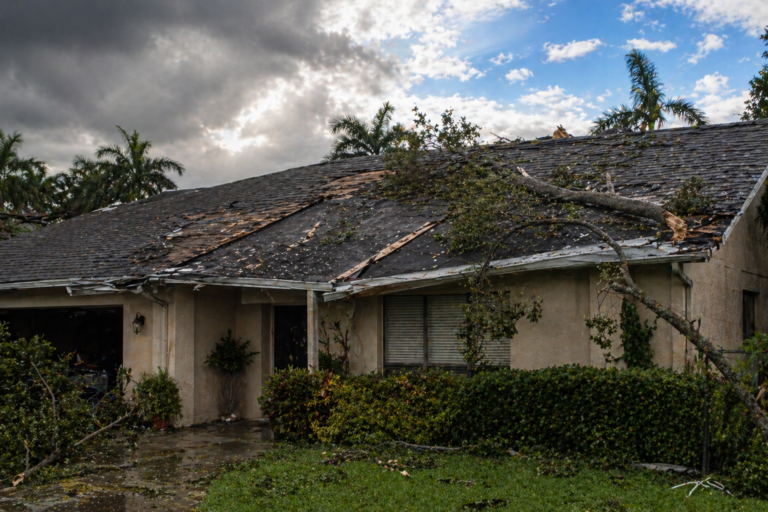
Hurricane and wind events Even a storm that doesn’t directly damage your roof can loosen fasteners and flashing, creating vulnerabilities that compound over the following months.
How to Extend Your Roof’s Lifespan in Oakland Park
Annual inspections A professional inspection each year catches small problems before they become expensive. Flashing repairs, resealing pipe boots, and clearing debris from valleys cost a fraction of what they prevent.
Keep gutters clean Clogged gutters in Florida cause water to back up under shingles and along the fascia, rotting the wood and creating leak pathways. Clean gutters at minimum twice per year.
Trim overhanging trees Branches rubbing against shingles accelerate granule loss. Falling branches cause direct impact damage. Keep all trees trimmed to at least 3 feet of clearance from the roof surface.
Don’t pressure wash tile roofs A common mistake in South Florida. Pressure washing removes the weatherproofing coat from concrete tiles and can dislodge mortar, creating more problems than it solves. Use low-pressure soft washing if cleaning is needed.
Address repairs immediately Every month a small leak goes unrepaired in Florida’s humidity adds potential mold, wood rot, and insulation damage. A $350 repair today prevents a $5,000 remediation tomorrow.
When to Schedule a Roof Inspection in Oakland Park
Schedule a professional inspection if:
- Your roof is within 2 years of the end of its expected lifespan
- You’ve experienced any storm or hurricane in the past 12 months
- You notice any interior water staining or ceiling discoloration
- You’re preparing to sell or buy a home in Oakland Park
- You haven’t had an inspection in more than 2 years
Call Oakland Park Roofers at (754) 256-5424 for a free roof inspection. We’ll assess your roof’s current condition, estimate remaining service life, and give you an honest recommendation whether that’s a $0 bill, a minor repair, or a planned replacement timeline.
No pressure. Just the information you need to make a smart decision.